Blog

  • Minister Mahabir Pun and TOKMA Leadership Discuss IT Investment, Innovation and Employment in Nepal

    Minister Mahabir Pun and TOKMA Leadership Discuss IT Investment, Innovation and Employment in Nepal

    Kathmandu, Nepal: In a significant discussion aimed at advancing Nepal’s digital economy and strengthening international technology collaboration, Honorable Mahabir Pun, Minister of Science, Technology and Innovation, Government of Nepal, held a high-level meeting with Dr. Kumar Gurung, CEO of Tokma Digital Corporation (TDC), Nebraska, USA, and four other members of the TOKMA leadership team.

    The meeting focused on attracting foreign direct investment (FDI) to Nepal’s information technology sector, creating employment opportunities for Nepali professionals, fostering innovation, strengthening technology education and positioning Nepal as a competitive technology and innovation destination in South Asia.
    During the meeting, Dr. Gurung formally introduced TOKMA – One Stop Services, an innovative digital platform designed to connect customers with trusted service providers through a single application. Guided by the slogan, “Everything you need, just one tap away,” the platform aims to simplify access to a broad range of services while creating an integrated digital ecosystem for customers and service providers.

    Nepal at the Center of TOKMA’s Global Vision
    Dr. Gurung emphasized that although Tokma Digital Corporation is headquartered in the United States, Nepal remains central to the company’s long-term vision and development strategy. He noted that the majority of TOKMA’s current workforce is based in Nepal, demonstrating the company’s commitment to investing in local talent and creating meaningful professional opportunities for Nepali citizens.

    The TOKMA leadership outlined a broader vision in which Nepal could develop into an important technology development and operational hub capable of producing globally competitive digital products and services. The company plans to continue expanding opportunities in software engineering, IT services, digital marketing, customer support, operations management and other high-demand professional sectors.

    “We believe Nepal has the talent, determination and innovative capacity needed to compete globally. Our goal is to create opportunities that allow Nepali professionals to participate in the global digital economy without having to leave their homeland,” Dr. Gurung said during the discussion.

    Challenges Facing IT Investment in Nepal
    A major portion of the meeting was devoted to challenges affecting foreign investment and the development of Nepal’s technology sector. The TOKMA delegation emphasized that Nepal has significant potential to attract international technology investment, but improvements in administrative efficiency, regulatory clarity, workforce development and digital infrastructure could substantially strengthen the country’s competitiveness.

    Administrative delays were identified as one of the major concerns for foreign investors. The delegation cited the experience of Tokma Technologies Pvt. Ltd., which required approximately six months to complete its FDI approval process. The TOKMA leadership suggested that a modernized and fully digital approval mechanism could significantly reduce processing times and provide international investors with greater confidence and predictability.

    Transparency and good governance were also discussed as essential components of an investment-friendly environment. The delegation emphasized that transparent digital processes, clearly defined procedures and strong accountability mechanisms could help reduce opportunities for unofficial payments while improving investor confidence in Nepal.

    Another major issue raised during the meeting was the availability and retention of highly skilled IT professionals. Although Nepal has a growing population of talented young technology professionals, many skilled workers seek opportunities abroad because of higher salaries, career prospects and access to advanced technology industries. The delegation stressed the importance
    of expanding high-quality IT education, creating competitive employment opportunities within Nepal and strengthening cooperation between universities and private technology companies.

    The discussion also addressed the gap between academic curricula and the practical skills demanded by the technology industry. Participants emphasized that university programs should place greater importance on hands-on learning, internships, industry partnerships, project-based education and exposure to emerging technologies. Such reforms could help graduates transition more effectively from academic institutions into professional technology careers.

    Foreign-exchange regulations and other regulatory constraints were also discussed. The delegation noted that international technology companies require clear, predictable and efficient mechanisms for investment, payments and cross-border business operations. Improving regulatory clarity and simplifying procedures could make Nepal more attractive to foreign technology companies seeking development and operational bases in South Asia.

    Intellectual property protection was another important subject of discussion. Stronger enforcement of software copyrights, patents, trademarks and other intellectual property rights was identified as essential for encouraging innovation, protecting technology companies and attracting international investment.

    The meeting also highlighted the importance of strengthening Nepal’s digital infrastructure. Continued investment in data centers, cloud computing facilities, reliable high-speed connectivity and other advanced digital infrastructure would help Nepal compete more effectively with established technology hubs in the region.

    Cybersecurity preparedness was similarly identified as a growing national priority. As Nepal’s economy becomes increasingly digital, the risks associated with cybercrime, data breaches and attacks on critical digital infrastructure are also expected to increase. Strengthening national cybersecurity capabilities, developing skilled cybersecurity professionals and improving institutional preparedness were therefore discussed as important elements of Nepal’s long-term digital strategy.

    The delegation further emphasized the importance of consistent technology policies, regulatory stability and an investment-friendly business environment. Predictable policies and long-term strategic planning, participants noted, could strengthen Nepal’s reputation as a reliable destination for international technology investment.

    Proposal for Nepal IT Research and Innovation Center
    Among the major recommendations presented during the meeting was the establishment of a dedicated Nepal IT Research and Innovation Center in collaboration with relevant national institutions.
    The proposed center would focus on technology research, emerging technologies, product development, commercialization and innovation. It could also serve as a collaborative platform connecting government agencies, universities, researchers, entrepreneurs, startups and private-sector technology companies.

    The center could provide opportunities for young researchers and technology professionals to develop innovative solutions while helping transform promising ideas and academic research into commercially viable products and services. Participants discussed how such an institution could contribute to building a knowledge-based economy and accelerate Nepal’s transition toward an innovation-driven nation.

    The TOKMA delegation also emphasized the importance of strengthening Nepal’s startup ecosystem. Greater cooperation among entrepreneurs, investors, universities, government institutions and established technology companies could help promising startups access mentorship, technology expertise, investment opportunities and international markets.

    Expanding Collaboration and Employment Opportunities
    The meeting explored potential collaboration among TOKMA, the Ministry, innovation institutions, universities and private-sector stakeholders. Discussions centered on technology-sector development, employment generation, internship and skills-development programs for students and young professionals, international project opportunities for Nepali technology experts, intellectual property protection, workforce development and public-private partnerships.

    Dr. Gurung clarified that TOKMA is not seeking financial assistance or government endorsement. Instead, the company seeks guidance, institutional cooperation and opportunities to contribute its technological expertise, international experience and professional network to Nepal’s economic and technological advancement.

    A central objective of the company’s strategy is to create professional opportunities that allow Nepali engineers, developers, designers, marketers and other skilled professionals to work on international projects while remaining in Nepal. Such a model could help create high-value employment, strengthen local expertise and enable Nepal to participate more directly in the global digital economy.

    Annual Information Technology Summit & Exhibition Proposed
    One of the most notable proposals discussed during the meeting was the creation of an Annual Information Technology Summit & Exhibition (AITSE), envisioned as a flagship international event that could help position Nepal as an emerging global technology and innovation destination.

    The proposed summit would bring together government leaders and policymakers, international investors, venture capital firms, universities, research institutions, global technology companies, entrepreneurs, innovators, startups and industry experts.

    The event would provide a platform to showcase Nepal’s technological capabilities, promote innovative products and research, attract foreign investment, facilitate international partnerships and connect Nepali technology companies and professionals with global markets. It would also seek to encourage entrepreneurship and generate high-value employment opportunities for Nepali youth.

    TOKMA expressed its interest in collaborating with the Government of Nepal and relevant institutions to explore organizing the summit through a public-private partnership model. During the discussion, Minister Pun advised the TOKMA leadership to meet with the Prime Minister regarding the proposal before proceeding toward a final decision on the initiative.

    Minister Pun Welcomes Innovation and Private-Sector Participation
    Minister Pun acknowledged the importance of innovation-driven investment and emphasized the need for stronger collaboration among government institutions, private enterprises, academic institutions, researchers and innovators to accelerate Nepal’s digital transformation.

    The discussion highlighted the value of initiatives that create employment, encourage innovation, strengthen practical technology education and connect Nepal with international markets. Research, entrepreneurship and practical technological solutions were also discussed as important foundations for sustainable economic development.

    The meeting reflected a shared understanding that government alone cannot build a competitive technology economy. Universities, private companies, entrepreneurs, researchers, international investors and government institutions all have important roles to play in developing an ecosystem capable of supporting innovation and creating opportunities for the next generation.

    A Shared Vision for Nepal’s Digital Future
    The meeting concluded with both sides expressing interest in exploring practical opportunities for collaboration that could strengthen Nepal’s technology ecosystem, attract international investment and generate high-quality employment opportunities for Nepali professionals.

    The discussions reflected a broader vision of a future in which Nepal does not simply consume technologies developed elsewhere but increasingly researches, develops and exports its own digital products and services to the international market.

    With a young and increasingly technology-oriented population, expanding digital connectivity and a growing pool of IT professionals, Nepal has an opportunity to strengthen its position in the global digital economy. Achieving that potential, participants emphasized, will require investment-friendly policies, modern infrastructure, quality education, stronger intellectual property protection, research and innovation, cybersecurity preparedness and sustained cooperation between government and the private sector.

    The meeting between Minister Mahabir Pun and the TOKMA leadership led by Dr. Kumar Gurung ultimately highlighted a common vision: leveraging technology, innovation, international collaboration and Nepal’s human talent to create sustainable economic growth, generate employment and empower the next generation of Nepali professionals.

  • International Gurung Buddhism Council Concludes in Kathmandu

    International Gurung Buddhism Council Concludes in Kathmandu

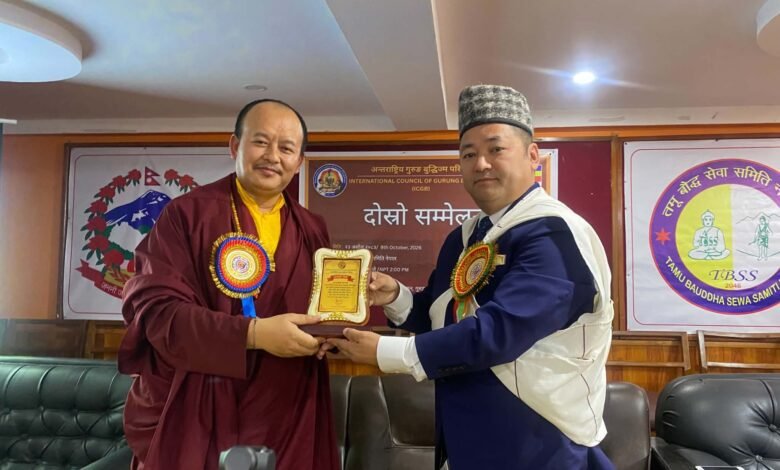
    Kathmandu, Nepal: The second international conference of the International Gurung Buddhism Council (IGBC), a global organization representing Buddhist followers within the Tamu (Gurung) community, has successfully concluded in Kathmandu.

    The conference, chaired by the Council’s founding president, Dr. Kumar Gurung, brought together prominent Lama spiritual leaders, presidents and representatives of various Gurung organizations, and members of the Gurung community who practice and follow Buddhism.

    Established in 2024 in Omaha, Nebraska, USA, by Dr. Gurung, the International Gurung Buddhism Council was founded as a common platform to unite Gurung Buddhists living across the world. The organization brings together members from Nepal, India, the United States, the United Kingdom, Australia, and several European countries.

    The Council aims to preserve and promote the traditional customs, cultural heritage, and identity of the Gurung community while encouraging the adoption of the fundamental principles of Buddhism. It has also been actively contributing to the preservation and development of the Gurung language, traditional practices, and cultural institutions. Additionally, the organization supports the education and training of Gurung Buddhist Lamas and the development of Buddhist monasteries within Gurung communities.

    Dr. Kumar Gurung was born into a Nepali-speaking Gurung family in Bhutan, whose ancestral roots trace back to Okhaldhunga in eastern Nepal. His family had migrated to Bhutan due to various historical and social circumstances.

    Following the displacement of Nepali-speaking communities from Bhutan, Dr. Gurung spent several years in a Bhutanese refugee camp in Nepal. He was later resettled in the United States under the third-country resettlement program.

    After establishing himself in business and entrepreneurship in the United States, Dr. Gurung began promoting Gurung Buddhism as a movement dedicated to preserving Gurung cultural identity while embracing the essential teachings of Gautama Buddha.

    In collaboration with Buddhist practitioners and Gurung community leaders, including Dhruva Gurung and Pushpa Gurung, who had been advocating the practice of Gurung Buddhism in Nepal, he established the International Gurung Buddhism Council in the United States.

    The organization has since expanded its international presence, establishing branch offices in Nepal, India, the United Kingdom, and Australia.

    Addressing the conference, founding president Dr. Kumar Gurung explained that the concept of Gurung Buddhism seeks to create harmony between traditional Gurung customs and the fundamental teachings of Buddhism.

    “We have defined Gurung Buddhism as a practice that preserves the traditional customs and cultural heritage of the Gurung community while embracing the fundamental principles of Buddhism, including the Four Noble Truths and the Five Precepts,” Dr. Gurung said.

    “Our mission is to ensure that being a Buddhist does not require someone to abandon their Gurung identity, traditions, or cultural heritage. A person should be able to preserve their identity as a Gurung while sincerely following the teachings and principles of Buddhism,” he added.
    Dr. Gurung, who is also recognized as a Lama spiritual teacher and an interfaith leader in the United States, highlighted several initiatives undertaken by the Council to promote Buddhist education and preserve Gurung cultural heritage.

    He stated that the organization has supported Buddhist monasteries in Nepal, organized discussions on the preservation of Gurung customs and traditions, and conducted online Gurung language classes to encourage younger generations to maintain their ancestral language.

    The Council has also published educational manuals explaining traditional Gurung cultural practices and Buddhist teachings, along with journals dedicated to Gurung Buddhism.

    Among its major initiatives, Dr. Gurung highlighted the commencement of a project to translate the complete collection of the Buddhist Tripitaka scriptures into the Nepali language, with the objective of making the original teachings of the Buddha more accessible to Nepali-speaking Buddhist communities and the general public.
    Speaking as the chief guest, respected Buddhist spiritual teacher Khenpo Sir Lama Gurung emphasized the importance of addressing confusion within the Gurung community regarding the relationship between Buddhist teachings and traditional cultural practices.

    He stressed that Gurung communities should adopt an approach that enables them to practice Buddhism faithfully while preserving cultural traditions that do not contradict Buddhist principles.
    “In certain circumstances, some Gurung Lamas have continued to perform practices such as animal sacrifice, even though such activities contradict the fundamental teachings of Buddhism,” Khenpo Gurung said.
    “Performing such practices in the name of tradition cannot be considered the proper observance of Buddhist teachings. However, this does not mean that every traditional custom and cultural practice should be abandoned. Traditions that do not conflict with Buddhist principles can and should be preserved,” he explained.

    Khenpo Gurung also expressed concern over the relatively small number of qualified Gurung Buddhist Lamas and emphasized the need to expand Buddhist education and monastic training opportunities for younger generations.

    He noted that strengthening the number and capacity of Gurung Lamas would play an important role in preserving both Buddhist teachings and the cultural heritage of the Gurung community.

    Speaking at the conference, IGBC Deputy President Dhruva Gurung emphasized that preserving the essential elements of Gurung customs and traditions is necessary to maintain the community’s distinct cultural identity.

    “If we abandon all our traditional customs and cultural practices, we may remain Buddhists, but we risk losing our identity as Gurungs,” he said.

    He explained that the community should identify, preserve, and continue those cultural practices that are compatible with Buddhist teachings rather than completely abandoning its ancestral traditions.

    Dhruva Gurung further emphasized the significant responsibility of Gurung Lamas in maintaining this balance.

    He pointed out that some Gurung Lamas who have received formal education in Buddhist monasteries may have limited knowledge of traditional Gurung customs and cultural practices. Therefore, he stressed the importance of providing them with additional education and practical training in Gurung cultural traditions.

    Such efforts, he said, would help develop a new generation of Buddhist spiritual leaders who are knowledgeable about both Buddhist philosophy and Gurung cultural heritage.
    The second international conference highlighted the growing importance of international cooperation among Gurung Buddhist communities in preserving their spiritual, linguistic, and cultural heritage.

    Through its expanding international network, the International Gurung Buddhism Council seeks to strengthen cooperation among Gurung Buddhist organizations, spiritual teachers, cultural institutions, and community members across different countries.

    The Council’s broader vision is to promote Buddhist moral education, encourage the practice of compassion and nonviolence, preserve the Gurung language and cultural traditions, and support the development of Buddhist institutions for future generations.

  • Bhutanese Diaspora Delegation Arrives in Nepal to Advance Humanitarian Access, Reconciliation

    Bhutanese Diaspora Delegation Arrives in Nepal to Advance Humanitarian Access, Reconciliation

    Kathmandu, Sept. 26: Dr. Kumar Gurung, a Bhutanese diaspora leader residing in Nebraska, United States, arrived in Kathmandu on Friday as part of an initiative aimed at promoting humanitarian access, family reunification and reconciliation for Bhutanese communities affected by displacement.

    Gurung is among seven representatives of Peace Initiative Bhutan (PIB), a U.S.-based nonprofit organization dedicated to advancing peacebuilding, human rights, humanitarian collaboration and reconciliation for Bhutanese communities displaced in the early 1990s.

    Originally from Bhutan, Gurung spent his formative years in Nepal before resettling in the United States. He holds a Ph.D. in Business Administration and serves as president of Triratna Foundation Inc. and the International Council of Gurung Buddhism. His professional and community engagement includes interfaith initiatives, humanitarian activities, cultural preservation, youth mentorship, scholarship programs and community development.

    The remaining six members of the delegation are expected to arrive in Kathmandu on September 26. The group includes PIB co-founder Sudarshan Sharma, members Aarati Chapagai, Dipisha K.C. Khatri and Anisha Thapa, co-founder and board director Dr. Suraj Budathoki, and PIB member Kailash Mishra.

    PIB stated that the delegation will conduct a series of consultations across Nepal between September 26 and October 8. The planned engagements will involve government representatives, diplomats, international organizations, civil-society institutions, academics, community leaders and Bhutanese refugee communities in Kathmandu, Jhapa and Morang.

    The Nepal visit forms part of PIB’s broader efforts surrounding its proposed Bhutan National Reconciliation Accord 2026 and Durable Solutions and Reconciliation Framework. Through these initiatives, the organization aims to encourage dialogue, strengthen mutual trust, expand humanitarian cooperation and facilitate constructive engagement between Bhutan, Nepal and the Bhutanese diaspora.

    According to Gurung, the initiative is intended to develop a peaceful and achievable humanitarian approach to addressing the challenges faced by families separated as a result of displacement.

    He expressed hope for a future in which the governments of Bhutan and Nepal, alongside the Bhutanese diaspora, collaborate to promote reconciliation, humanitarian partnerships and lasting peace.

    PIB’s proposed initiatives include facilitating family reunions, establishing humanitarian travel arrangements, restoring communication between relatives separated across borders and strengthening cooperation between relevant stakeholders.

    The organization has also suggested involving neutral humanitarian agencies, subject to the consent of the concerned parties. Such organizations could help verify individual cases, locate separated family members, resolve documentation-related challenges and facilitate communication between relatives.

    Highlighting the human impact of prolonged family separation, PIB co-founder Sudarshan Sharma emphasized that reconnecting families should remain at the heart of the initiative.

    “This is first and foremost about families,” Sharma said. He pointed to the importance of enabling parents and children to reunite, allowing relatives to attend funerals and giving grandparents opportunities to meet their grandchildren. He added that urgent humanitarian concerns should not remain unresolved while broader political differences continue.

    Similarly, Dr. Suraj Budathoki, co-founder and board director of PIB, said the delegation’s Nepal mission prioritizes addressing the humanitarian challenges experienced by Bhutanese families separated for more than three decades.

    He explained that the organization is pursuing practical arrangements that would allow Bhutanese people to visit family members in Bhutan, particularly in situations involving family reunions, serious medical conditions, bereavement and the restoration of family contact.

    The proposed reconciliation framework emphasizes nonviolence, mutual respect, inclusivity and humanitarian cooperation while recognizing the sovereignty and constitutional institutions of both Bhutan and Nepal.

    PIB said its proposal is informed by internationally recognized principles relating to family rights and family unity, including provisions of the Universal Declaration of Human Rights and relevant guidance from the United Nations High Commissioner for Refugees (UNHCR) concerning families separated by displacement.

    The organization is advocating for achievable initial steps that could provide assistance in urgent humanitarian situations while creating an environment of trust for future discussions and broader reconciliation efforts.

    During their stay, the delegation is expected to participate in multiple meetings, consultations and dialogue programs in Kathmandu and eastern Nepal to engage with stakeholders and explore possible avenues for cooperation.

    Peace Initiative Bhutan, established and led by members of the Bhutanese diaspora, works through advocacy, community engagement and peacebuilding initiatives. Its activities focus on promoting human rights, humanitarian cooperation and sustainable solutions for Bhutanese communities affected by forced displacement.

  • Dr. Kumar Gurung and Dr. Narad Pokhrel Recognized for Leadership and Community Contributions

    Dr. Kumar Gurung and Dr. Narad Pokhrel Recognized for Leadership and Community Contributions

    Venerable Dr. Kumar Gurung and Dr. Narad Pokhrel have received the 2026 Lifetime Legacy & Leadership Award for their long-standing contributions to their communities and various fields of service. The awards were presented at the Bhutanese Joint Annual Conference 2026 in Omaha and jointly conferred by several Bhutanese organizations. Dr. Gurung was recognized for his work in entrepreneurship, investment, spiritual practice, and community advocacy. At the same time, Dr. Pokhrel received recognition for his contributions to human services, research, writing and community development. The event also brought together cultural and literary activities that highlighted identity, education, and community connections.
    https://english.himalayatimes.com.np/2026/09/100723/?fbclid=IwY2xjawUXbfFwZG9mBWV4dG4DYWVtAjEwAGJyaWQRMXlTMFN2clowR2RvNjh2WTRzcnRjBmFwcF9pZBAyMjIwMzkxNzg4MjAwODkyAAEebC0cwSh1i55fpGAUd5C9QyZlaKCbway7TSlkLpoMdhs3Ki0ygC3CsHsup3I_aem_-jrndzOmjmqkt92cwqp1lA

  • Two Bhutanese Community Leaders Honored In Omaha

    Two Bhutanese Community Leaders Honored In Omaha

    After overcoming the hardships of a refugee journey to earn a doctorate in business administration, Dr. Kumar Gurung was celebrated in Omaha, Nebraska, for a lifetime of leadership, entrepreneurship, and service to the Bhutanese Nepali community, receiving the Lifetime Legacy and Leadership Award 2026 alongside fellow honoree Dr. Narad Pokhrel.

    https://ehimalayatimes.com/2026/09/482220/

  • From Refugee Roots to a Lifetime of Leadership: Dr. Kumar Gurung Honored in Omaha

    From Refugee Roots to a Lifetime of Leadership: Dr. Kumar Gurung Honored in Omaha

    Omaha, Nebraska   Dr. Kumar Gurung has been conferred the Lifetime Legacy and Leadership Award 2026 in recognition of his sustained contributions to education, spirituality, entrepreneurship, and humanitarian service within the Bhutanese-Nepali diaspora. The Global Bhutanese Organization, Global Bhutanese Literary Organization, Bhutanese American Music Association, Global Foundation, and the Bhutanese Society of Nebraska jointly presented the award.

    Venerable Dr. Kumar Gurung Honored with Lifetime Legacy Award in Omaha – Everest Times UK

  • Dr. Kumar Gurung Honored with Lifetime Legacy and Leadership Award 2026 at Bhutanese Convention in Omaha

    Dr. Kumar Gurung Honored with Lifetime Legacy and Leadership Award 2026 at Bhutanese Convention in Omaha

    Venerable Dr. Kumar Gurung, a prominent leader, entrepreneur, and spiritual figure in the Nepali-speaking Bhutanese community, received the Lifetime Legacy and Leadership Award 2026 at the Bhutanese Joint Annual Convention held in Omaha, Nebraska. The honor, jointly presented by five Bhutanese American organizations, recognized his contributions to education, spirituality, entrepreneurship, humanitarian service, and cultural preservation. Senior leader Dr. Narad Pokhrel was also honored at the same event.

    Venerable Dr. Kumar Gurung Honored with Lifetime Legacy Award in Omaha – TodayPress.com

  • Effects of Home Country Factors on Immigrant Entrepreneurship

    Effects of Home Country Factors on Immigrant Entrepreneurship

    By: Dr. Kumar Gurung (Ph.D.,MS.,MCEC.,LLB.)

    Another recurrent theme in the literature pertains to the country-of-origin benefits as possessed by immigrant entrepreneurs. In this regard, it has been distinguished that immigrant entrepreneurs possess the capabilities necessary to access and make use of the entrepreneurial opportunities and resources of their countries of origin despite their not being able to take complete advantage of the entrepreneurial ecosystem of the host country due to blocked mobility (Grujic, 2019). By extension, immigrant entrepreneurship, being both an economic and social phenomenon, can only be best understood by investigating the perspectives of both the host country and country of origin.

    When these perspectives are considered, it becomes clearer that contrary to the view that immigrant entrepreneurs reap the most benefits from their host countries, they tend to benefit from
    the entrepreneurial ecosystems of both the host and home countries. These benefits vary from country to country, often depending on country-specific economic conditions and related attributes (Roundy & Fayard, 2020). Still, the co-effects of the dual entrepreneurial ecosystems often lead to higher rates of both business and entrepreneurial success within specific groups of immigrants (Lilius & Hewidy, 2019). Therefore, those responsible for the formulation of policies in general
    and economic policies can harness the benefits and power of immigrant entrepreneurs to spur or increase economic activities through, among other ways, the development and deployment of
    programs designed to encourage immigrants to embed in the host country and country of origin entrepreneurial ecosystems (Windzio, 2015; March-Chorda, 2021). These findings support the
    popular and widely accepted view that immigrant entrepreneurship is influenced mainly by personal attributes, the entrepreneurial environment of the host country, the country-of-origin factors, and co-ethnic community characteristics (Song, 2019).

    Therefore, entrepreneurship among immigrants cannot – and ought not to be – explained or accounted for using just one factor, such as the host country characteristics (especially the
    entrepreneurial ecosystem of the host country). Instead, the other factors have to be considered as well. Even though the entrepreneurial environment of the host country plays one of the essential roles in influencing immigrant entrepreneurship (Roundy & Fayard, 2020), the other factors are no less significant. In an interconnected world characterized by globalization and increased (almost unrestricted) movement of human resources, home country factors are increasingly playing a pivotal role in influencing immigrant entrepreneurship. It is because immigrants are increasingly having contact – direct or indirect – with their home country and, in doing so, utilize the home country entrepreneurial ecosystem to further their entrepreneurship abroad (Pung et al., 2017)

    While this practice was still possible before the advent of globalization, it has increased markedly due to the ease with which immigrants can connect with people and other resources back in their home countries without necessarily having to be physically present. This, in turn, means that even immigrants’ movements are restricted by virtue of their status as immigrants; they can still tap in and use resources from their home country to advance or support their entrepreneurship in their host countries (Brzozowski, 2016; Dutta et al., 2021).

    Other than the home country factors, the other important but often overlooked or underrated factor affecting immigrant entrepreneurs is their attributes (Audretsch et al., 2019). According to Pardos & Xena (2019), every human being is unique in different respects, and this uniqueness remains
    with the individual regardless of whether he/she lives and works (in the home country or abroad). Some of the most important personal attributes that influence an individual’s entrepreneurial
    capabilities include levels of education, attitude towards saving and amount of savings one has, work experience, ambitions, migratory experience, language skills, legal status, and age. Others are the purpose of migration, marital status, gender, risk-taking attitude, and the length of stay in a host country (Pardos & Xena, 2019). As an example, risk-averse people are less likely to become entrepreneurs in a new country, while those who are risk-takers are not only likely to become entrepreneurs but successful entrepreneurs as well. Similarly, ambitious immigrants are more
    likely to become entrepreneurs in a new country than less ambitious immigrants. Thus, combined with other factors, personal factors play an essential role in influencing the entrepreneurship of immigrants (Pardos & Xena, 2019).

    The issue of regional competitiveness is vital to the success of any immigrant entrepreneur. Regional competitive advantage is of great importance in supporting overall global competitiveness; this is why any entrepreneurial ecosystem promotes competitive advantage (Acs et al., 2017). Today, different models attempt or endeavor to explain the functioning of entrepreneurial ecosystems. However, the associations and interactions between the various elements constitute an entrepreneurial ecosystem. According to network theory, there are different and unique entrepreneurial ecosystem conditions that grow in specific locations; and any given entrepreneurial ecosystem influences regional competitive advantage by way of different mechanisms such as reduction of transactional costs, productive entrepreneurship, transfer of knowledge, and innovation (Grujic, 2019; Roundy & Fayard, 2020)

  • Barriers to Immigrant Entrepreneurship

    Barriers to Immigrant Entrepreneurship

    By: Dr. Kumar Gurung (Ph.D.,MS.,MCEC.,LLB.)


    One of the fundamental phenomena of the second decade of the 21st century (and one that becomes of great international interest) is immigrant entrepreneurship (Igboamazu, 2016; March-Chorda, 2021). Immigrant entrepreneurs are growing in the host countries, including in the U.S. (Awotoye, & Singh, 2018). They have started the business in the cities where they have relocated to (Lilius, & Hewidy, 2019); however, their firms are more likely to fade away and fail due to the demands of immigration (Pung et al., 2017). The Demands (Problems) of Immigration (DI) comprises six correlated, reliable, valid scales determined by Brady et al. (2021). They are language barriers, sense of loss, not feeling at home, perceived discrimination, novelty, and occupation (Pung et al., 2017). Furthermore, it impacts immigrant entrepreneurs’ intentions to engage in three specific entrepreneurial behaviors: venture formation, growth, and abandonment (Awotoye & Singh, 2018).

    Vedula & Kim (2019) demonstrated that immigrant entrepreneurial ventures fail or fade away because of the lower quality of the entrepreneurial ecosystem. Further, Igboamazu’s (2016) and Northwood & Sherrie (2018) research uncover financial limitation as to the first worry for immigrants. They face difficulty acquiring startup loans from the banks because they lack the banks’ requisite collateral (Khosa & Kalitanyi, 2015). They have to work several jobs for startup funds since they have no inherited wealth (Igboamazu, 2016).

    If the problem continues, the firms created by immigrants will have higher exit rates (Mata, & Alves, 2018); due to the demands of immigration (Ding, 2011), general barriers. Such barriers will
    reduce immigrant entrepreneurs’ intentions to grow their firms and increase the intentions to abandon them (Awotoye & Singh, 2018). The immigrants who arrived between 1987 and 1996
    exceed natives in personal income and homeownership (Kerwin, 2018). According to Vedula & Kim (2019), higher quality of entrepreneurial ecosystems shelters entrepreneur ventures, while ventures in weaker ecosystems are more likely to fade away and fail. For serial entrepreneurs, ecosystem quality has a much smaller impact on venture survival (Vedula, & Kim, 2019).
    Immigrants have higher business ownership rates than native-born citizens (Fairlie & Lofstrom, 2015; Dutta et al., 2021).

    Across the world, immigrants in general and immigrant entrepreneurs face immense challenges because they often lack an adequate understanding of the business environment of their host countries (Deschamps, 2020). Moreover, while both male and female immigrants tend to be affected, women tend to be more affected for different reasons (Brieger & Gielnik, 2021). To
    understand these disproportionate effects on women, one has to appreciate that women more than men are likely to migrate across the world, not necessarily out of choice but because of events beyond their control, such as conflicts, natural disasters, and poverty (Brieger & Gielnik, 2021). In addition, family, labor, and marriage also tend to make it more likely that women will migrate more frequently than men (Brady et al., 2021). For instance, data released by the World Migration Report in 2019 indicated that women made up 48% of all international migrants in that year,
    leading to over 130 million migrant women. However, it is also a fact that women tend to be grossly underrepresented in entrepreneurship both in their home countries and abroad (where they have migrated) (Praetorius et al., 2016; Dutta et al., 2021). The main challenge in this regard is that even though it is widely accepted that migration has become feminized, the effects of the feminization of migration are not well known (Brady et al., 2021).

    Therefore, the lack of an interdisciplinary and intersectional approach and inherent biases have led to the diminished understanding of the role those migrant women play as entrepreneurs and contributors to global business (Brieger & Gielnik, 2021). Today, the concept of female entrepreneurship capacity and the framing of highly skilled migrant women remains underexamined even though the entrepreneurial capacity building is one of the widely debated topics in the literature (Van Kooy, 2016; March-Chorda, 2021). Therefore, addressing these gaps in knowledge (by understanding the entrepreneurial experiences of highly skilled female migrants) is critical in understanding whether the quality entrepreneurial ecosystem would subdue the demands of immigration and other general barriers of the immigrant entrepreneurs in the U.S. (Aman et al., 2021).

    From the outset, it is worth noting that immigrant entrepreneurs usually start or expand businesses in the cities they have relocated with the hope of advancing their entrepreneurial skills of simply earning a living (Awotoye & Singh, 2018; Pung et al., 2017). However, businesses belonging to immigrant entrepreneurs face many challenges, some of which are insurmountable. This explains the high risk of business collapse experienced among businesses owned by immigrant
    entrepreneurs relative to those owned by native entrepreneurs. Regardless of whether the businesses set up by immigrant entrepreneurs fade away, fail, or exit, different reasons account for this; and the most notable include language barriers, sense of loss, not feeling at home, perceived discrimination (Pung et al., 2017). These barriers are best articulated and measured by the
    Demands of Immigration (DI) scale, comprised of six correlated, reliable, and valid scales (Brady et al., 2021). The scale addresses language barriers, sense of loss, not feeling at home, perceived
    discrimination, novelty, and occupation (Pung et al., 2017). When taken together, these barriers effectively make up the challenges that impact immigrant entrepreneurs’ intentions to engage in
    three specific entrepreneurial behaviors: venture formation, growth, and abandonment (Awotoye & Singh, 2018).

    According to Vedula and Kim (2019), immigrant entrepreneurial ventures are more likely to fail or fade away due to the comparatively lower-quality entrepreneurial ecosystem these ventures operate in or are exposed to Igboamazu (2016) and March-Chorda, 2021) shared this view in part, who argues that financial limitations are among the major causes of problems and even failure or fading way of businesses set up by immigrants. Thus, it is his view that financial constraints are significant factors impeding immigrants’ business success. The same line of argumentation is upheld by Khosa and Kalitanyi (2015) and Northwood & Sherrie (2018), who contend that immigrant entrepreneurs face difficulties acquiring startup loans from the banks because they lack the banks’ requisite collateral. Therefore, these immigrants are often forced to work several jobs to save enough startup capital since they have lacked any inherited wealth (Igboamazu, 2016).

    Yet, it remains a reality that immigrant entrepreneurs make essential contributions to the economic growth and development of the U.S. (Kerr & Kerr, 2018), a fact that makes it ever so important to confirm that the many challenges they face are addressed or at least limited. In this regard, the entrepreneurial ecosystem helps produce entrepreneurship in a geographic area, among individuals, organizations, and institutions (Brown & Mason, 2017). The entrepreneurial ecosystem is often descriptive rather than theoretical and does not emphasize the linkages between ecosystem forces and entrepreneurial activities (Stam & Spigel, 2016). Subsequently, whatever obstacles immigrant entrepreneurs face are likely to lower their intentions to grow their firms while increasing their intentions to quit (Awotoye & Singh, 2018).

  • Immigrant Entrepreneurs

    Immigrant Entrepreneurs

    By: Dr. Kumar Gurung (Ph.D., MS., MCEC., LLB.)

    Immigrants are the people who move to host countries (where they are not natives) to settle permanently, seeking economic opportunity, political refuge, and religious freedom (Awotoye & Singh, 2018; Bernstein et al, 2019; Ugarte et al, 2020). They are growing in the host countries, including the USA (Berg, 2015; Awotoye & Singh, 2018). Immigrant entrepreneurs (IE) are permanent residents or naturalized citizens who create or expand economic activity to explore new products, markets, or processes, thereby generating value
    (Ahmad & Seymour, 2008)They could be replicative or innovative. Creative entrepreneurs engage in business activities related to a new product, service, or product creation strategy, or conveyance
    (Griffiths et al, 2012; Igboamazu, 2016). According to Awotoye & Singh (2018); Pung et al. (2017), immigrant entrepreneurs have started businesses in the cities they have relocated to (Lilius & Hewidy, 2019); however, their firms are more likely to fade away, fail, or exit. The reasons for these are language barriers, a sense of loss, not feeling at home, and perceived discrimination.
    etc., as measured by the DI scale (Brady et al., 2021).

    The Demands of Immigration (DI) scale is comprised of six correlated, reliable, valid scales determined by Brady et al. (2021) addressing language barriers, sense of loss, not feeling at home,
    perceived discrimination, novelty, and occupation (Pung et al., 2017). It impacts immigrant entrepreneurs’ intentions to engage in three specific entrepreneurial behaviors: venture formation,
    growth, and abandonment (Awotoye & Singh, 2018). Vedula and Kim (2019) demonstrated that immigrant entrepreneurial ventures fail or fade away because of the entrepreneurial ecosystem’s lower quality.

    Further, Malki et al. (2022) research also uncovers financial limitations as to the first worry for immigrants. All participants in his study agreed that financial constrain is a significant factor in
    their business success. Immigrant entrepreneurs face difficulty acquiring start-up loans from the banks because they lack the banks’ requisite collateral (Khosa & Kalitanyi, 2015). They have to
    work several jobs for start-up funds since they have no inherited wealth (Igboamazu, 2016; Malki et al., 2022). If this group of entrepreneurs does not form, grow, or instead fade away, fail, or
    abandon firms, it will negatively impact the U.S. economy with the increase in the unemployment rate and the absenteeism of innovations (Kerr & Kerr, 2018; Jensen & Laurie, 2017). According to
    Brzozowski (2016), the research primarily focuses on a small number of countries with few popular immigrant societies and is not studied noticeably from their entrepreneurial perspective.

    If the problem persists, the firms created by immigrants will consequently have higher exit rates (Mata & Alves, 2018); due to the demands of immigration (Brady et al., 2021) and lack of a quality entrepreneurial ecosystem (Vedula & Kim, 2019). The entrepreneurial ecosystem is a structure of interconnected stakeholders, including customers, investors, mentors, suppliers, and employees (Cavallo et al., 2019). According to Welter (2011), it is economic, social, and cultural forces. It helps produce entrepreneurship in a geographic area, individuals, organizations, and institutions (Brown & Mason, 2017; Kuckertz, 2019; Spigel & Harrison, 2018). The entrepreneurial ecosystem often descriptive rather than theoretical (Roundy & Fayard, 2020) and does not emphasize the linkages between ecosystem forces and entrepreneurial activities (Stam & Spigel, 2016). The stressand obstacles immigrant entrepreneurs face will reduce their intentions to grow their firms and increase their intentions to abandon (Awotoye & Singh, 2018).

    The immigrants who arrived between 1987 and 1996 exceed natives in personal income and homeownership 41% vs. 37% (Kerwin, 2018). According to Vedula and Kim (2019), higher
    quality of entrepreneurial ecosystems shelters entrepreneur ventures, while ventures in weaker ecosystems are more likely to fade away and fail. For serial entrepreneurs, ecosystem quality has a much smaller impact on venture survival (Vedula & Kim, 2019). Therefore, this research will consider whether the Quality Entrepreneurial Ecosystem (QEE) will contribute to overcoming the demands of immigration (DI), as stated by Vedula and Kim (2019). Qualitative research effectively addresses grand challenges and develops an insightful theory that explores the factors influencing entrepreneurial activities in the immigrant environment (Awotoye & Singh, 2018; Eisenhardt et al.,2016).

    In many European countries, including the United States, immigrants have higher business ownership rates than native-born citizens (Fairlie & Lofstrom, 2015). According to Bernstein et al. (2019), the firms’ immigrants establish value to the U.S. through tax revenue, innovation, and employment creation (Jensen & Laurie, 2017). Elon Musk, Steeve Jobs, Sergey Brin, Arianna Huffington, and Peter Thiel are well-known, successful immigrant entrepreneurs in the U.S. (Bernstein et al., 2019). A growing academic literature confirms that high-skilled immigrants
    provide long-lasting benefits to the U.S. economy (Jensen & Laurie, 2017) through entrepreneurship, job creation, and innovation (Bernstein et al., 2019).

    Recent research using data from the Survey of Small Business Owners found that the first- generation immigrants created about 25% of firms in the U.S. (Pekkala & Kerr, 2020) and founded
    90 U.S listed enterprises on Fortune 500 (Brzozowski, 2016). The second-generation immigrants who have at least one foreign-born parent is over 40 million in the USA, and they are also
    anticipated to impact the U.S. economy if the host country extends solidarity (Ugarte Gurrutxaga et al., 2020; Sanderson et al., 2021; Grigorieff et al., 2020). In states with more significant immigrant populations like New York, New Jersey, and California, the first-generation immigrants created more than 40% of the firm (Kerr & Kerr, 2018). According to 2006-2010 estimates, the American Community Survey found that 18.2% of business owners represent all U.S. business types (Fairlie & Lofstrom, 2015). Further, they accounted for 16.3% of the total U.S. workforce, with four million employees working with second-generation immigrant firms (Kerr & Kerr, 2018). Therefore, to address immigrant entrepreneurs’ needs by finding an empirical support system is essential as they denote a significant percentage of growing entrepreneurs in the U.S. (Awotoye &
    Singh, 2018).

    Awotoye and Singh (2018) highlighted that immigrant found or remained in ventures irrespective of their stress level (Vandor & Franke, 2016; Kerr & Kerr, 2016) because they have a higher level
    of resilience as compared to non-immigrants. Entrepreneurial resilience involves adaptation to the challenges resulting in liquidation, bankruptcy, or closure (Awotoye & Singh, 2018). Research has revealed that resilience is positively associated with continuous improvement in challenging times
    (Chadwick & Raver, 2013), the health of entrepreneurs and their firms (Virginie & Olivier, 2012) and firm success (Fisher et al., 2016). Higher entrepreneurial resilience will lower intentions to
    abandon the business (Awotoye & Singh, 2018); however, the entrepreneurs might have more significant penalties if things do not improve as anticipated. Thus, a high-quality entrepreneurial ecosystem might be a solution for immigrant entrepreneurs (Vedula & Kim, 2019).